
Introduction
On many modern housing developments, responsibility for the roads, drains, landscaped areas and other shared facilities is not always straightforward.
Some parts of an estate may eventually be adopted and maintained by a local authority, water company or other statutory body, while other areas can remain privately managed. The cost of maintaining those private areas may then be recovered from property owners through an estate management charge.
This means that simply knowing a road has been “adopted” does not necessarily tell you who is responsible for every drain, landscaped area or piece of infrastructure around it.
In this guide, we look at how these responsibilities can work on residential developments in Wales and what property owners and management companies should check.
Who Is Responsible for the Roads?
Roads on a residential estate can either be adopted by the local highway authority or remain privately maintained.
Where a road has been adopted, the highway authority will generally be responsible for maintaining the adopted highway. However, the exact extent of the adopted area matters. Private parking areas, access roads, footpaths or other parts of the development may still fall outside the adopted highway.
On developments where roads remain private, responsibility for maintenance will depend on the legal arrangements for the estate. This may sit with a management company, developer or property owners, with the costs recovered through an estate management charge where the relevant documents provide for this.
If responsibility is unclear, the starting point should be the development’s legal documents and the highway adoption records rather than assuming that everything beyond the property boundary belongs to the council.
What About Drains and Drainage?
Drainage can be more complicated because different parts of the drainage system may have different responsibilities.
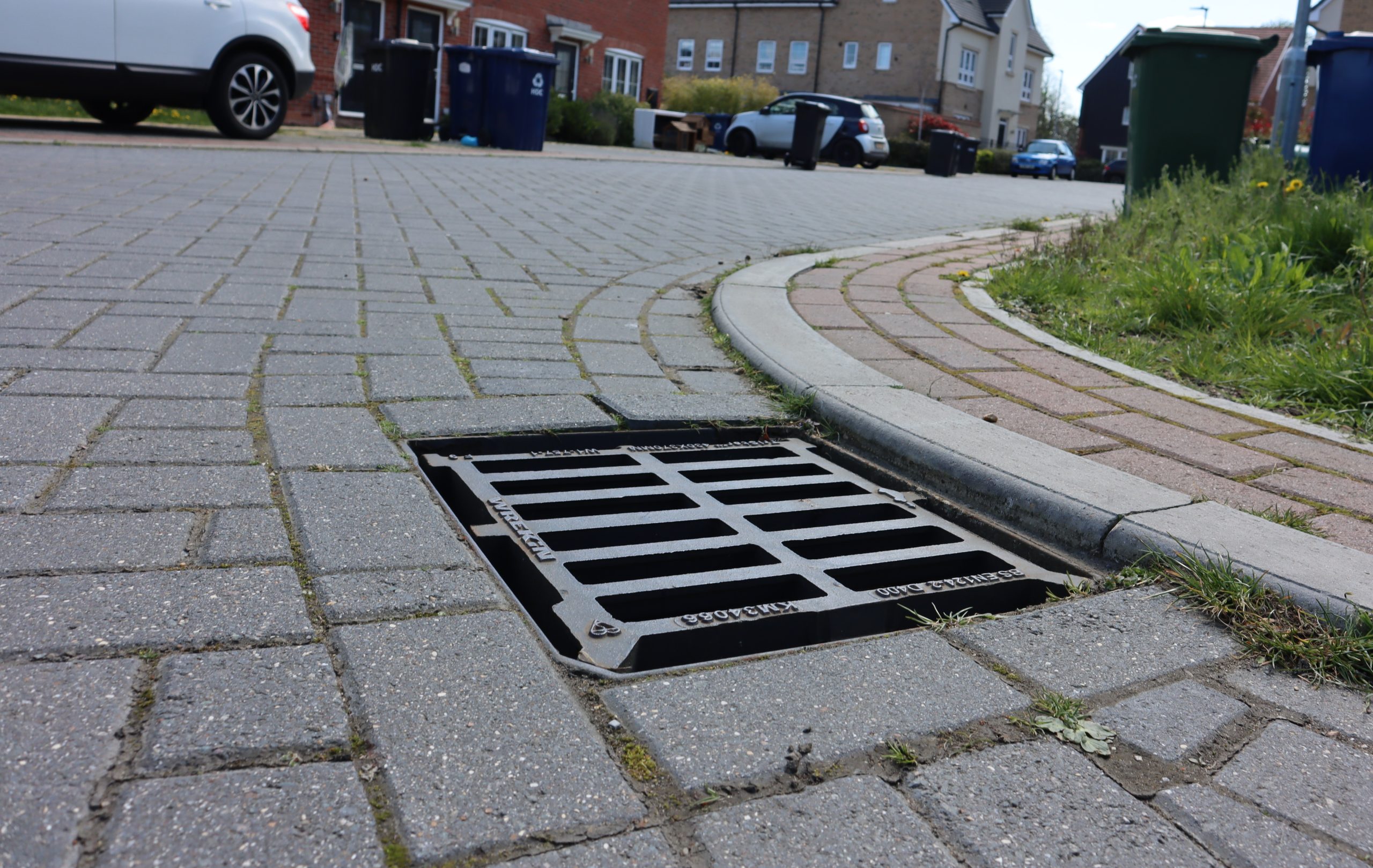
The fact that a road has been adopted does not necessarily mean that every drain serving the development has also been adopted. Highway drainage, public sewers, surface water systems and private drainage serving communal areas can each have different ownership and maintenance arrangements.
Some drainage infrastructure may be the responsibility of the highway authority or the relevant water and sewerage company, while other systems may remain the responsibility of the estate management company or property owners.
Where there is a drainage problem, it is therefore important to establish exactly which part of the system is affected and who is responsible for it before arranging works or assuming that the local authority will deal with it.
Who Maintains the Open Spaces and Communal Areas?
Many residential estates include landscaped areas, grass verges, planted areas, play areas or other communal spaces that are not adopted by the local authority.
These areas may remain privately managed through an estate management company, with property owners contributing towards their maintenance in accordance with the legal arrangements for the development.
The management responsibilities can extend beyond landscaping. Depending on the estate, privately managed areas may also include lighting, paths, boundary features, drainage infrastructure, play equipment and other shared facilities.
This is why two neighbouring developments can have very different management arrangements, even where they appear similar. The responsibilities for each estate need to be established from its own legal and management documentation.
What Does the Estate Management Company Do?
Where communal areas and services remain privately managed, an estate management company may be responsible for arranging their ongoing maintenance and administration.
Depending on the development, this can involve preparing budgets, collecting estate management charges, appointing and managing contractors, arranging inspections, dealing with repairs and planning for future maintenance.
The managing agent’s role is to carry out the day-to-day management on behalf of the management company or client. The precise responsibilities will depend on the legal documents and management arrangements for the individual development.
A well-managed estate should also have clear records showing what is privately maintained, what has been adopted and which organisation is responsible for the different areas and services.
Why Do Property Owners Pay an Estate Management Charge?
Where parts of a residential development remain privately managed, the costs of maintaining those areas need to be funded.
Depending on the legal arrangements for the estate, property owners may be required to contribute towards those costs through an estate management charge. This can cover expenditure such as grounds maintenance, repairs, inspections, communal lighting, drainage maintenance, insurance or other shared services applicable to the development.
The services included and the way costs are divided between properties will depend on the individual estate and its legal documentation. An estate management charge should therefore reflect the responsibilities and services that apply to that particular development rather than being treated as a standard charge that is the same on every estate.
Property owners should be provided with clear information about the charges they are being asked to contribute towards and the services those charges fund.
How Can You Find Out Who Is Responsible?
If responsibility for part of an estate is unclear, it is important to check the relevant records rather than relying on assumptions about what has or has not been adopted.
Depending on the issue, this may involve checking the property’s title documents, transfer or lease, estate plans, management company records, highway adoption information and drainage or sewer records.
The local authority may be able to confirm the extent of an adopted highway, while the relevant water and sewerage company may hold information about adopted drainage infrastructure.
For privately managed areas, the development’s legal documents should help establish the responsibilities of the management company and the contributions required from individual property owners.
Estate Management Across North Wales
PPM North Wales provides professional management for residential estates across North Wales, including developments with privately managed communal areas and shared infrastructure.
From our permanent staffed office in Conwy, we coordinate the day-to-day management of estates, including service charge administration, contractor management, maintenance, site inspections and longer-term planning.
Every development is different, so our starting point is understanding the responsibilities and management arrangements that apply to the individual estate.
Looking for an Estate Managing Agent?
If you’re responsible for a residential estate in North Wales and would like to discuss its management requirements, contact PPM North Wales to find out how we can help.