
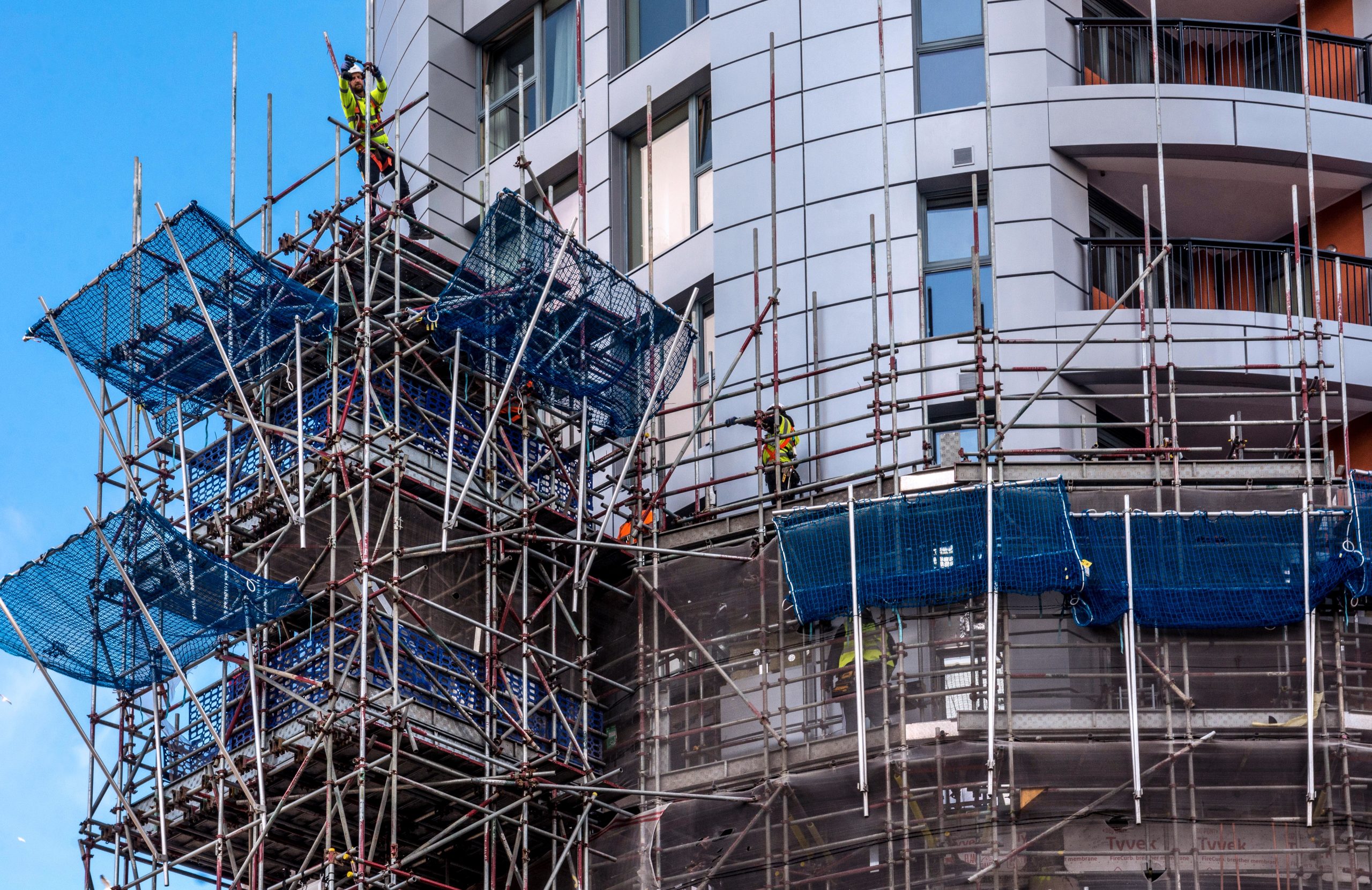
You can postpone putting money aside. You can’t necessarily postpone the work your building will need.
Nobody particularly enjoys paying money into a reserve fund.
When a building appears to be in reasonable condition and there are no major projects immediately planned, it can be tempting for directors and leaseholders to question why money should be collected and left sitting in the bank.
Wouldn’t it be better to keep the service charge down?
In the short term, perhaps. But residential buildings do not stand still. Roofs deteriorate, external decorations become due, drainage systems fail, fire-safety requirements change and major components eventually need repairing or replacing.
The real question is often not whether significant expenditure will arise, but when – and whether the money will be there when it does.
That is where a properly planned reserve fund can make an enormous difference.
What is a reserve fund?
A reserve or sinking fund is money collected from leaseholders and set aside towards future expenditure, where the terms of the lease allow for this.
Instead of waiting until a £50,000, £100,000 or even larger project becomes necessary and then asking leaseholders to find the money at relatively short notice, contributions can be built up gradually over a number of years.
It doesn’t make the eventual work cheaper.
It changes when the money is collected and can make the cost far more manageable when the work becomes necessary.
A real example of what can happen
We are currently dealing with a situation that demonstrates exactly why reserve planning is so important.
At one development, no contributions had been made to the reserve fund for approximately four years. At the same time, expenditure continued to be paid from the money that had previously accumulated.
Unsurprisingly, the reserve reduced.
The development is now facing significant fire-safety works, but there is insufficient money available to carry them out.
Leaseholders are consequently having to contribute thousands of pounds this year to begin rebuilding the funds required.
Unfortunately, there is a further consequence.
Even substantial additional contributions do not necessarily produce enough money immediately. It takes time to collect the sums required, meaning necessary works can potentially be delayed while funding is raised.
Where those works relate to fire safety or another significant building-safety issue, that creates a much more serious situation.
Directors have responsibilities when making decisions on behalf of their management company. Where a known safety issue requires action, a lack of available funds does not make the issue disappear. Delays can create difficult questions around risk, decision-making and potential liability.
This is why reserve planning isn’t simply about having a healthy-looking bank balance.
It can affect a management company’s ability to respond when important work actually needs to be done.
Keeping the service charge low isn’t always saving leaseholders money
There is understandable pressure on directors to keep service charges affordable.
Nobody wants to tell their neighbours that contributions need to increase, particularly when there is no obvious work taking place at the time.
But there is a significant difference between controlling unnecessary expenditure and failing to make provision for foreseeable future expenditure.
If £20,000 is likely to be required in several years’ time, deciding not to collect towards it doesn’t remove the £20,000 liability.
It simply leaves the bill for another day.
And if several major items become necessary at around the same time, the eventual demand can be considerably more difficult for leaseholders to manage.
A low service charge is therefore not necessarily evidence that a development is being managed economically.
Sometimes it can mean that future expenditure is simply not being adequately funded.
How much should be put aside?
There is no single answer.
Every development is different.
An older apartment building with lifts, extensive communal areas, flat roofs and large landscaped grounds is likely to have very different future liabilities from a small modern development with relatively few communal facilities.
Reserve contributions should therefore ideally be considered alongside the actual building and its anticipated maintenance requirements.
What condition is the roof in? When will external decoration next be required? Are there lifts or mechanical systems approaching the end of their expected life? Are significant fire-safety or compliance works anticipated? What major expenditure is likely over the next five or ten years?
A professional condition survey or long-term maintenance plan can be particularly valuable for larger or more complex developments.
The purpose isn’t to predict every future expense perfectly. That isn’t possible.
It is to make reasonable provision for expenditure that can already be anticipated.
The managing agent can advise – but cannot create the money
This is an important distinction.
A managing agent can prepare budgets, identify forthcoming expenditure, obtain professional advice and recommend appropriate reserve contributions.
But the money ultimately has to come from somewhere.
If directors decide year after year not to increase reserve contributions because they want to keep the service charge down, the managing agent cannot magically produce the funds when major works eventually become necessary.
This is one reason why good record-keeping and clear professional recommendations are important.
Directors need sufficient information to make informed decisions about the development they are responsible for.
Sometimes those decisions will be unpopular.
That doesn’t necessarily make them wrong.
Reserve funds also help spread costs between generations of owners
There is another issue that is sometimes overlooked.
Imagine an owner lives in an apartment for ten years while very little is collected towards replacing the roof.
They sell.
Six months later, the roof requires major works and the new owner receives a substantial demand.
The previous owner benefited from that roof throughout their ownership but contributed very little towards its eventual replacement.
Regular reserve contributions can help spread some long-term building costs across the owners who benefit from those components over time, rather than leaving whoever happens to own an apartment when the bill finally arrives to meet the entire cost.
Again, the precise arrangements will depend upon the lease.
And the lease really does matter
As with so many aspects of leasehold management, you cannot simply decide what seems fairest and implement it.
The lease is the starting point.
Leases differ considerably in the provisions they contain for reserve or sinking funds. The lease may determine whether money can be collected in advance, what it can be used for and how contributions are apportioned.
Before establishing or substantially changing reserve contributions, the relevant lease provisions therefore need to be understood.
A reserve fund isn’t a guarantee
Even excellent planning cannot anticipate everything.
Unexpected defects arise. Legislation changes. Construction costs increase. Equipment can fail earlier than expected. A fire risk assessment or other professional inspection may identify work that had not previously been anticipated.
Having a reserve fund therefore doesn’t guarantee that leaseholders will never receive an additional demand.
But there is an enormous difference between encountering an unexpected £100,000 project with £80,000 already available and encountering exactly the same problem with virtually nothing in the bank.
Good reserve planning is about looking beyond this year’s budget
At Prestige Property Management (NW) Ltd, we believe service-charge budgeting should not simply be about producing the lowest possible figure for the coming year.
It should also consider what the development is likely to need in the future.
That means looking at the building, its condition, planned maintenance, anticipated major works, existing reserves and, importantly, the provisions of the lease.
There will always be a balance between keeping contributions affordable today and preparing for tomorrow.
But repeatedly postponing reserve contributions doesn’t make future expenditure disappear.
You can postpone putting money into a reserve fund. You can’t necessarily postpone the work your building will eventually need.
And when that work arrives, having planned for it can make the difference between a manageable project and a financial crisis for the development.
This article provides general information about residential service charges and reserve funds and is not legal advice. The ability to collect and use reserve funds will depend upon the terms of the relevant lease and the circumstances of the individual development.