
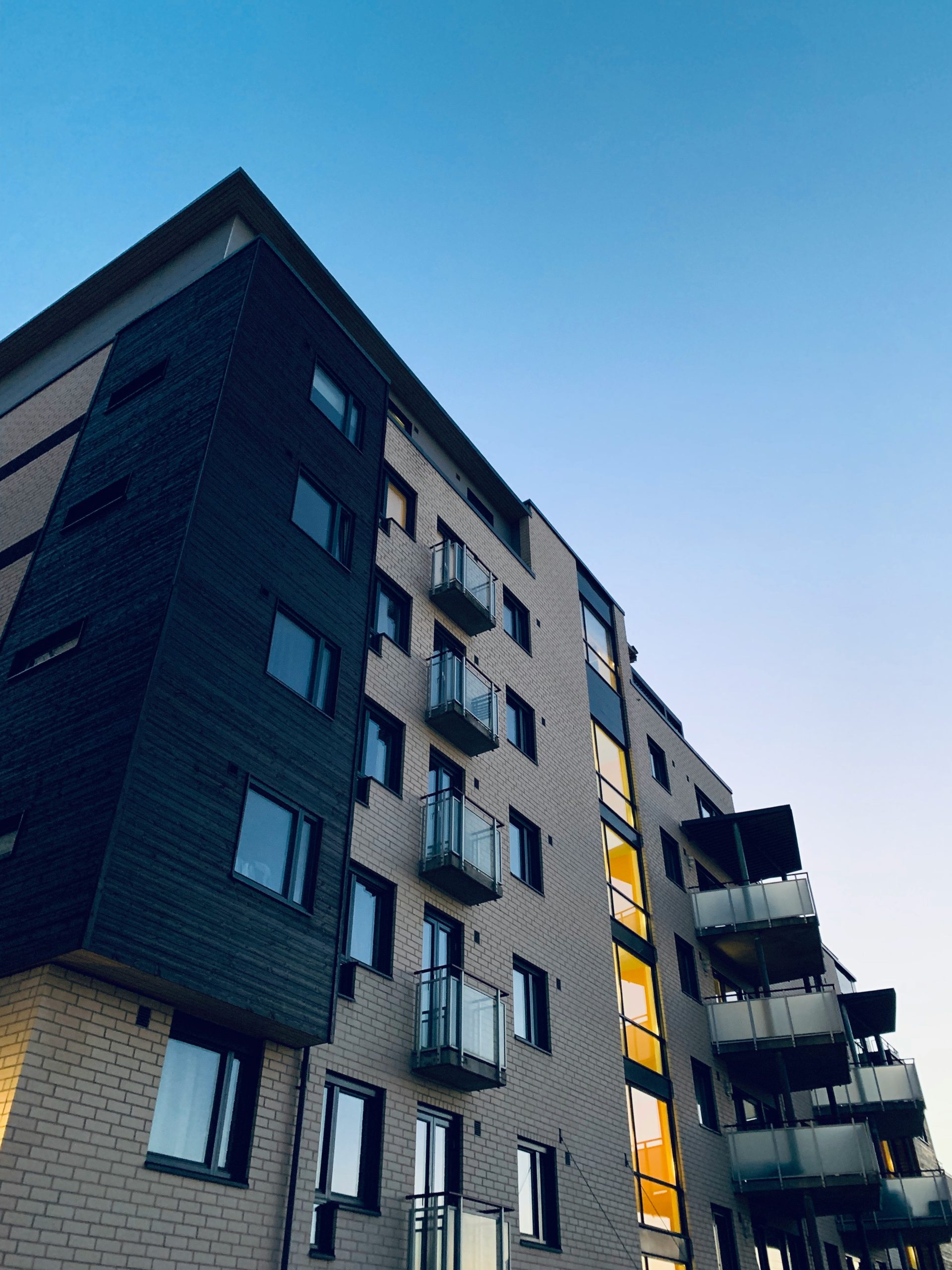
Building safety legislation in Wales is undergoing significant changes, with new responsibilities being introduced for those who own and manage residential apartment buildings.
The Building Safety (Wales) Act 2026 received Royal Assent on 27 April 2026 and establishes a new framework for managing fire and structural safety in residential buildings.
While much of the publicity surrounding building safety has focused on high-rise developments, the new Welsh legislation also extends to smaller apartment blocks.
For leaseholders and apartment owners across North Wales, understanding these changes is important, particularly where they may affect building maintenance, safety improvements and future service charge expenditure.
Does the new legislation affect your apartment building?
The legislation introduces three categories of residential buildings:
- Category 1: Buildings at least 18 metres high or containing seven or more storeys.
- Category 2: Buildings below 18 metres and seven storeys, but at least 11 metres high or containing five or more storeys.
- Category 3: Buildings below 11 metres and containing fewer than five storeys.
The framework generally covers buildings containing two or more residential units, subject to certain statutory exceptions.
This means that even smaller residential developments may be subject to new building safety requirements, although the extent of those requirements will vary depending on the building’s classification.
Is building safety legislation different in Wales and England?
Although England and Wales share some existing building safety legislation, the regulatory arrangements are not identical.
Following the introduction of the Building Safety Act 2022, England established a new regulatory framework for higher-risk residential buildings, including requirements concerning registration, accountable persons and ongoing building safety management.
Wales has taken a different approach through the Building Safety (Wales) Act 2026, which introduces a separate framework covering residential buildings across three categories.
One important difference is that the Welsh framework extends to smaller residential apartment blocks, with requirements proportionate to the category of building.
This means that leaseholders in Wales should not automatically assume that guidance, registration requirements or deadlines published for buildings in England apply to their own development.
It is also important to distinguish between legislation that has already come into force and new requirements that are still awaiting implementation.
As the Welsh legislation is introduced in stages, apartment owners and management companies should refer to guidance published by the Welsh Government and seek appropriate professional advice where necessary.
What changes can apartment owners expect?
The legislation introduces clearer responsibilities for those accountable for building safety.
As the new requirements are brought into force, these will include:
Fire safety assessments and management
Buildings within the scope of the legislation will be subject to duties concerning the assessment and management of fire safety risks.
This may involve reviewing existing fire safety arrangements, identifying outstanding concerns and ensuring that appropriate measures are taken to manage risks.
Structural safety
Additional duties concerning structural safety will apply to Category 1 and Category 2 buildings.
These requirements are intended to ensure that structural risks are identified, assessed and appropriately managed.
Improved building safety information
The legislation introduces new requirements concerning the recording and sharing of building safety information.
For residents, this should mean greater transparency about the safety of their buildings and the responsibilities of those managing them.
Resident involvement
Residents will have additional rights concerning building safety information and the ability to raise concerns.
The extent of the formal resident engagement requirements will depend on the building’s category and the regulations introduced.
Will service charges increase?
One of the questions apartment owners are likely to ask is whether the new legislation will increase their service charges.
The answer will depend on the individual building.
Some developments may already have comprehensive fire safety arrangements, appropriate maintenance programmes and well-maintained compliance records.
Others may require additional inspections, professional assessments, administration or remedial works.
The Welsh Government is also consulting on proposed registration arrangements for Category 1 and Category 2 buildings, including a proposed registration fee of £250. This is not yet a confirmed statutory charge.
Where additional expenditure is necessary, the question of whether those costs can be recovered through service charges will depend on the lease, the applicable legislation and the nature of the works.
It is important to recognise that the introduction of new legislation does not automatically mean that every building requires major improvements or expensive alterations.
Each building must be considered according to its own construction, condition, existing safety arrangements and legal requirements.
What about existing building safety defects?
Another important aspect of the new legislation concerns historic building safety defects.
The Act provides powers to introduce protections for qualifying leaseholders against certain remediation costs, together with mechanisms for seeking contributions towards the cost of addressing relevant defects.
Further regulations will determine how these protections operate in practice.
These provisions should not be confused with ordinary maintenance or repair obligations, which will continue to depend on the terms of individual leases and other applicable legislation.
When will the changes take effect?
Although the Building Safety (Wales) Act 2026 has received Royal Assent, many of its operational provisions are being introduced in stages.
The Welsh Government is continuing to consult on the regulations needed to implement the new framework, including building registration and the identification of accountable persons.
Registration of Category 1 buildings was anticipated to begin in December 2027, although implementation dates remain subject to the necessary regulations and official confirmation.
There is therefore no single date on which all the new requirements will apply to every residential building in Wales.
Apartment owners should be cautious about information suggesting that all buildings must immediately comply with every provision of the new legislation.
What should apartment owners do now?
For most apartment owners, the immediate priority is to remain informed and engage with their management company or managing agent.
Owners should familiarise themselves with the fire safety arrangements for their building, report concerns promptly and cooperate with reasonable requests relating to inspections and necessary safety works.
Where significant expenditure is proposed, leaseholders should expect appropriate information explaining the nature of the works, why they are necessary and how the costs are to be funded.
Good communication between apartment owners, management companies and managing agents will be particularly important as the new legislation is implemented.
Building safety and professional block management
At Prestige Property Management (NW) Ltd, we manage residential apartment buildings and developments throughout North Wales, including Conwy, Denbighshire, Gwynedd and Anglesey.
We recognise that the evolving building safety framework will present new responsibilities and challenges for residential management companies and apartment owners.
Our approach is to work closely with management company directors, residents and appropriately qualified professionals to support effective building management, maintenance and compliance.
As further regulations and guidance are introduced, we will continue to monitor developments and keep our clients informed of changes relevant to their buildings.
For further information about our residential block and estate management services, please contact Prestige Property Management (NW) Ltd.
This article provides general information about the Building Safety (Wales) Act 2026 as at November 2026. It does not constitute legal advice. Specific responsibilities and requirements will depend on the legislation in force, the building concerned and its ownership and management arrangements.