
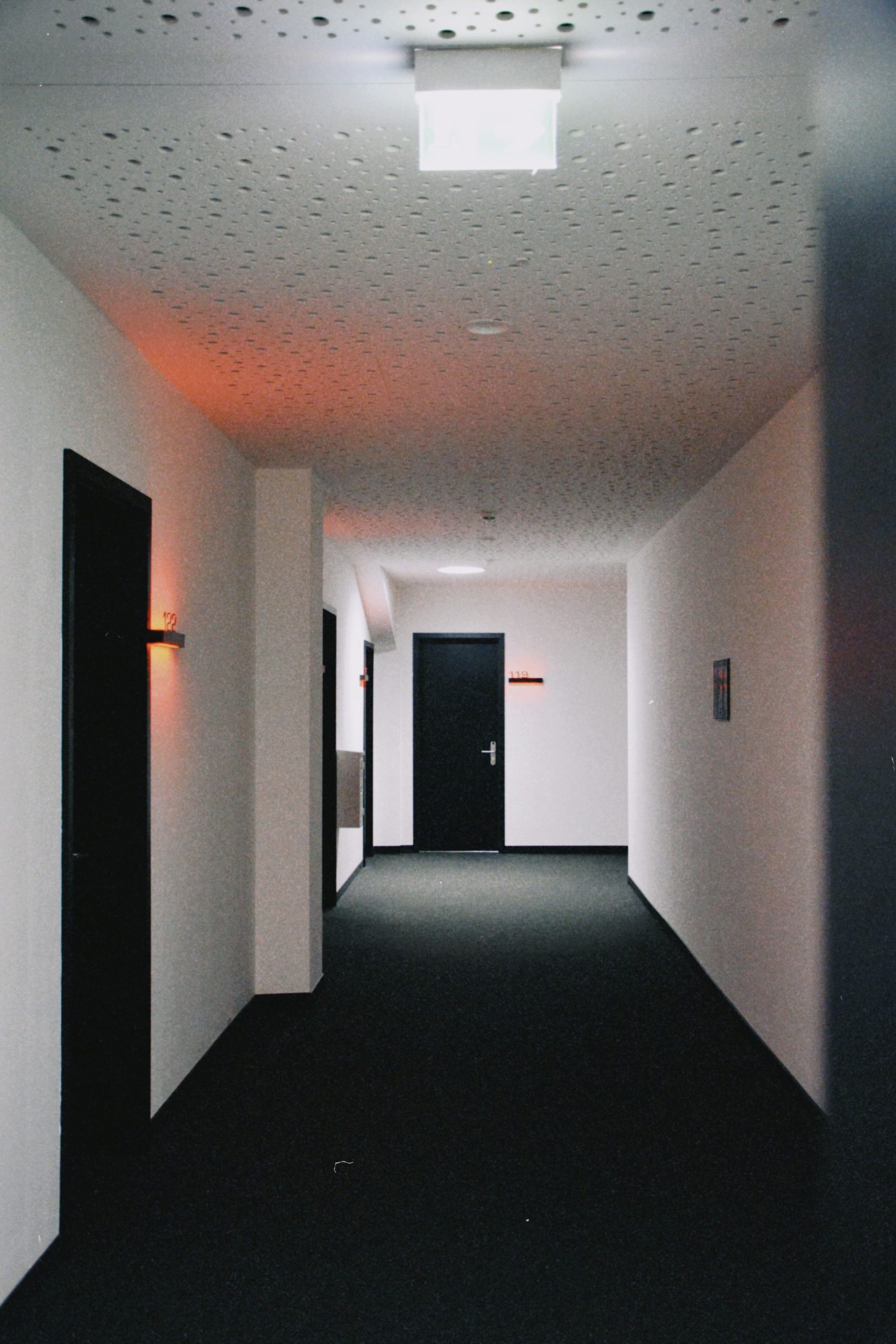
Communal hallways, staircases and landings are not simply shared spaces within an apartment building. They often form part of the route residents may need to use to leave the building safely during a fire or other emergency.
Keeping these areas clear is therefore an important part of managing fire safety in residential blocks.
North Wales Fire and Rescue Service includes the following advice within its home fire-safety guidance:
“Keep the exits from your home clear so that people can escape if there’s a fire.”
This simple principle is equally important within the communal parts of blocks of flats, where residents may need to move through corridors, landings and staircases to reach a place of safety.
Why must communal escape routes be kept clear?
During a fire, smoke can reduce visibility very quickly. An item that appears harmless under normal conditions can become a serious obstruction or trip hazard when residents are trying to leave through smoke or poor lighting.
Items left in communal areas may also:
Restrict the available width of an escape route
Make evacuation more difficult for children, older residents or people with reduced mobility
Obstruct access for firefighters and other emergency services
Interfere with the operation of fire doors
Increase the amount of combustible material within the common parts
Provide fuel that could allow a fire to develop or spread
The common parts of a residential building are covered by fire-safety legislation and must be considered within the building’s fire risk assessment. This commonly includes entrance halls, internal corridors, staircases and landings.
What items can cause a problem?
Items that may need to be removed from communal areas include:
Plant pots and artificial plants
Coat stands, shoe racks and loose footwear
Tables, chairs and other furniture
Bicycles, scooters and pushchairs
Parcels, rubbish and recycling
Mobility equipment where no suitable storage arrangement has been agreed
Decorative items made from combustible materials
Anything placed where it could prevent a fire door from closing properly
Pictures, doormats and small decorative items are sometimes permitted, but this will depend on the findings of the building’s fire risk assessment and the fire-safety policy adopted for that particular development.
Some buildings operate a managed-use policy, under which a limited number of carefully controlled items may be allowed. Other buildings require a clear or sterile-area policy, meaning that communal routes must remain completely free from residents’ belongings and combustible decorations.
The requirements can differ because every building has its own construction, layout, evacuation strategy and level of risk.
“It has been there for years” does not mean it is safe
Residents sometimes question why an item must be removed when it has stood in the same place for many years without causing a problem.
Fire-safety requirements develop as buildings are assessed, guidance changes and risks are identified. The absence of a previous incident does not mean that an obstruction or combustible item is safe to retain.
Managing agents and management companies must act upon the recommendations contained within the building’s current fire risk assessment. Where an assessor identifies that communal areas must be kept clear, those responsible for the building cannot simply disregard that advice.
Fire doors must also remain unobstructed
Items must never be positioned where they could hold open, obstruct or prevent the full operation of a communal fire door.
Fire doors are designed to limit the movement of fire and smoke through a building. A fire door that has been wedged open or prevented from closing may not provide the protection residents expect.
Residents should not remove door-closing devices, wedge communal doors open or store belongings within the swing of a fire door.
Everyone has a part to play
Good communal fire safety depends upon cooperation between residents, directors, landlords, managing agents and contractors.
Residents can help by:
Keeping halls, stairs and landings free from personal belongings
Using designated storage areas where these are provided
Never wedging open a communal fire door
Reporting damaged doors, emergency lighting or fire-safety equipment
Following the fire-safety and evacuation arrangements for their building
Contacting the managing agent before placing decorative or other items in communal areas
Requests to remove belongings are not intended to make a building feel unwelcoming. Their purpose is to keep escape routes usable, reduce avoidable fire risks and protect everyone living within the development.
Communal hallways, stairs and landings are shared safety spaces. Keeping them clear could make a vital difference during an emergency.
Sources and further information:
North Wales Fire and Rescue Service – At Home Fire Safety
Welsh Government – Making Your Small Block of Flats Safe from Fire