
PPM North Wales

Who Is Responsible for Building Safety in Apartment Blocks in Wales?

Who Is Responsible for Building Safety in Apartment Blocks in Wales?

Understanding the responsibilities of management companies, volunteer directors, managing agents and apartment owners.

Building safety is an increasingly important aspect of residential block management in Wales. With the introduction of the Building Safety (Wales) Act 2026, greater emphasis is being placed on identifying who is responsible for managing fire and structural safety risks in apartment buildings.

However, for many apartment owners and management company directors, understanding where these responsibilities lie is not always straightforward.

One of the most common misunderstandings is that appointing a managing agent transfers responsibility for the building entirely to that agent.

In reality, management companies, their directors and managing agents have different but closely connected roles.

The Role of the Management Company

Many apartment buildings in Wales are managed by residents’ management companies or Right to Manage (RTM) companies.

These companies are generally responsible for the management, repair and maintenance of communal areas, in accordance with their leases and legal obligations.

Depending on the building’s ownership and management arrangements, their responsibilities may include:

  • Maintaining and repairing communal areas.
  • Ensuring appropriate fire risk assessments and other necessary inspections are undertaken.
  • Considering recommendations from qualified professionals.
  • Authorising necessary repairs and safety improvements.
  • Approving budgets and arranging funding through service charges.
  • Ensuring the company’s applicable legal obligations are fulfilled.

Although a professional managing agent may organise and administer much of this work, the appointment of an agent does not automatically transfer the company’s legal responsibilities.

Under building safety legislation, statutory duties may also apply to other parties, depending on ownership, repairing obligations, contractual responsibilities and the extent of their control over the building.

The Important Role of Volunteer Directors

One aspect of residential block management that is sometimes overlooked is the contribution made by volunteer directors.

Many management companies are run by apartment owners who give their time to help look after their buildings, often without previous experience of property management, construction or building safety legislation.

It is an important role and one that has become increasingly demanding.

Directors may be required to consider complex professional reports, understand changing legislation and make decisions involving substantial expenditure.

This can be particularly challenging when essential repairs or building safety improvements require significant financial contributions from fellow leaseholders.

Directors may also face pressure from other apartment owners who disagree with proposed works or question their necessity or cost.

It is important to remember that these directors are often neighbours and fellow residents who have volunteered to undertake responsibilities for the benefit of the whole building.

Their contribution deserves recognition, understanding and support.

What Does a Managing Agent Do?

A professional managing agent works on behalf of the management company, providing the knowledge, administration and practical support needed to manage the building effectively.

Depending on the terms of the management agreement, this may include:

  • Arranging fire risk assessments and other relevant inspections.
  • Engaging suitably qualified contractors and professional advisers.
  • Obtaining quotations for repairs and safety improvements.
  • Explaining professional recommendations to directors.
  • Advising on relevant legislation and compliance requirements.
  • Preparing budgets and collecting service charges.
  • Coordinating approved maintenance and improvement works.
  • Maintaining records of inspections, recommendations and outstanding actions.
  • Communicating with leaseholders and relevant authorities.

An experienced managing agent plays an important role in helping directors understand their responsibilities and make informed decisions.

However, the agent does not necessarily have the authority to approve substantial expenditure or make decisions that are reserved for the management company.

Managing agents can also have statutory responsibilities of their own, depending on the services they provide and the control they exercise over particular aspects of a building.

Clear management agreements, professional advice and good communication are therefore essential.

Why Can Building Safety Works Take Time?

Building safety improvements can involve considerable expenditure, particularly in older apartment buildings where construction standards and fire safety requirements have changed over time.

Directors must consider professional recommendations alongside available funds, lease provisions and the financial impact on apartment owners.

Sometimes further investigations, specialist advice or additional quotations are necessary before a decision can be made.

There may also be differing opinions among leaseholders about whether particular works are required or how they should be funded.

These situations can be challenging for everyone involved.

It is understandable that volunteer directors may feel uncomfortable making decisions that could result in significant additional costs for their neighbours.

However, where works are necessary to meet legal safety obligations, it is important that decisions are made within appropriate timescales and that any outstanding risks are properly managed.

A professional managing agent can support directors throughout this process by providing clear information, coordinating specialist advice, maintaining records and helping identify practical ways forward.

Leaseholders Have an Important Role Too

Building safety is not solely a matter for management companies, directors and managing agents.

Apartment owners also have an important part to play.

This includes understanding their responsibilities under the lease, contributing towards properly recoverable service charges and cooperating with necessary inspections and safety improvements.

It is equally important that leaseholders recognise the contribution made by volunteer directors.

Disagreements about expenditure are understandable, particularly when costs are significant. However, constructive communication and respectful discussion are far more likely to achieve positive outcomes.

Directors are often making difficult decisions on behalf of their fellow owners, and their role should be supported rather than discouraged.

Ultimately, everyone has a shared interest in ensuring that their building remains safe, properly maintained and financially sustainable.

What Does the Building Safety (Wales) Act 2026 Mean?

The Building Safety (Wales) Act 2026 received Royal Assent on 27 April 2026 and establishes a new framework for managing building safety risks in multi-occupied residential buildings in Wales.

The Act introduces three categories of regulated residential buildings:

  • Category 1: Buildings at least 18 metres high or with at least seven storeys.
  • Category 2: Buildings below the Category 1 thresholds but at least 11 metres high or with at least five storeys.
  • Category 3: Buildings below 11 metres and with fewer than five storeys.

The new framework provides for fire safety risk management across regulated residential buildings, with additional structural safety requirements for Category 1 and Category 2 buildings.

It also establishes the roles of Accountable Persons and Principal Accountable Persons.

These roles are determined by legal factors such as ownership of communal areas and relevant repairing obligations, rather than simply by who carries out the day-to-day management.

Importantly, appointing a managing agent does not automatically transfer the statutory role of Accountable Person or Principal Accountable Person to that agent.

However, the legislation also provides for certain safety management duties to extend to other persons, including those with relevant contractual obligations or control over parts of a building.

The Act is being brought into force in stages. Although some provisions are already in force, many of the detailed operational requirements are subject to further commencement and supporting regulations.

Management companies and managing agents should therefore keep developments under review and prepare for the requirements that will apply to their buildings.

Working Together for Safer Buildings

Effective building safety management depends on cooperation between management companies, volunteer directors, managing agents, qualified professionals and apartment owners.

Each has a different role, but all contribute towards the same objective: ensuring residential buildings remain safe and properly maintained.

At Prestige Property Management (NW) Ltd, we understand the challenges faced by volunteer directors, particularly as building safety legislation becomes increasingly complex.

We recognise that directors are often balancing professional recommendations, financial considerations and the expectations of their fellow apartment owners.

Our role is to provide practical guidance, clear communication and professional management support, helping directors understand their responsibilities and make informed decisions about their buildings.

With the right advice, professional support and a cooperative approach, management companies can navigate these challenges with greater confidence.

Prestige Property Management (NW) Ltd

Professional residential block and estate management across North Wales.
Posted by PPM North Wales in Advice & Insights
Building Safety in Wales: What the New 2026 Legislation Means for Apartment Owners

Building Safety in Wales: What the New 2026 Legislation Means for Apartment Owners

Building safety legislation in Wales is undergoing significant changes, with new responsibilities being introduced for those who own and manage residential apartment buildings.

The Building Safety (Wales) Act 2026 received Royal Assent on 27 April 2026 and establishes a new framework for managing fire and structural safety in residential buildings.

While much of the publicity surrounding building safety has focused on high-rise developments, the new Welsh legislation also extends to smaller apartment blocks.

For leaseholders and apartment owners across North Wales, understanding these changes is important, particularly where they may affect building maintenance, safety improvements and future service charge expenditure.

Does the new legislation affect your apartment building?

The legislation introduces three categories of residential buildings:

  • Category 1: Buildings at least 18 metres high or containing seven or more storeys.
  • Category 2: Buildings below 18 metres and seven storeys, but at least 11 metres high or containing five or more storeys.
  • Category 3: Buildings below 11 metres and containing fewer than five storeys.

The framework generally covers buildings containing two or more residential units, subject to certain statutory exceptions.

This means that even smaller residential developments may be subject to new building safety requirements, although the extent of those requirements will vary depending on the building’s classification.

Is building safety legislation different in Wales and England?

Although England and Wales share some existing building safety legislation, the regulatory arrangements are not identical.

Following the introduction of the Building Safety Act 2022, England established a new regulatory framework for higher-risk residential buildings, including requirements concerning registration, accountable persons and ongoing building safety management.

Wales has taken a different approach through the Building Safety (Wales) Act 2026, which introduces a separate framework covering residential buildings across three categories.

One important difference is that the Welsh framework extends to smaller residential apartment blocks, with requirements proportionate to the category of building.

This means that leaseholders in Wales should not automatically assume that guidance, registration requirements or deadlines published for buildings in England apply to their own development.

It is also important to distinguish between legislation that has already come into force and new requirements that are still awaiting implementation.

As the Welsh legislation is introduced in stages, apartment owners and management companies should refer to guidance published by the Welsh Government and seek appropriate professional advice where necessary.

What changes can apartment owners expect?

The legislation introduces clearer responsibilities for those accountable for building safety.

As the new requirements are brought into force, these will include:

Fire safety assessments and management

Buildings within the scope of the legislation will be subject to duties concerning the assessment and management of fire safety risks.

This may involve reviewing existing fire safety arrangements, identifying outstanding concerns and ensuring that appropriate measures are taken to manage risks.

Structural safety

Additional duties concerning structural safety will apply to Category 1 and Category 2 buildings.

These requirements are intended to ensure that structural risks are identified, assessed and appropriately managed.

Improved building safety information

The legislation introduces new requirements concerning the recording and sharing of building safety information.

For residents, this should mean greater transparency about the safety of their buildings and the responsibilities of those managing them.

Resident involvement

Residents will have additional rights concerning building safety information and the ability to raise concerns.

The extent of the formal resident engagement requirements will depend on the building’s category and the regulations introduced.

Will service charges increase?

One of the questions apartment owners are likely to ask is whether the new legislation will increase their service charges.

The answer will depend on the individual building.

Some developments may already have comprehensive fire safety arrangements, appropriate maintenance programmes and well-maintained compliance records.

Others may require additional inspections, professional assessments, administration or remedial works.

The Welsh Government is also consulting on proposed registration arrangements for Category 1 and Category 2 buildings, including a proposed registration fee of £250. This is not yet a confirmed statutory charge.

Where additional expenditure is necessary, the question of whether those costs can be recovered through service charges will depend on the lease, the applicable legislation and the nature of the works.

It is important to recognise that the introduction of new legislation does not automatically mean that every building requires major improvements or expensive alterations.

Each building must be considered according to its own construction, condition, existing safety arrangements and legal requirements.

What about existing building safety defects?

Another important aspect of the new legislation concerns historic building safety defects.

The Act provides powers to introduce protections for qualifying leaseholders against certain remediation costs, together with mechanisms for seeking contributions towards the cost of addressing relevant defects.

Further regulations will determine how these protections operate in practice.

These provisions should not be confused with ordinary maintenance or repair obligations, which will continue to depend on the terms of individual leases and other applicable legislation.

When will the changes take effect?

Although the Building Safety (Wales) Act 2026 has received Royal Assent, many of its operational provisions are being introduced in stages.

The Welsh Government is continuing to consult on the regulations needed to implement the new framework, including building registration and the identification of accountable persons.

Registration of Category 1 buildings was anticipated to begin in December 2027, although implementation dates remain subject to the necessary regulations and official confirmation.

There is therefore no single date on which all the new requirements will apply to every residential building in Wales.

Apartment owners should be cautious about information suggesting that all buildings must immediately comply with every provision of the new legislation.

What should apartment owners do now?

For most apartment owners, the immediate priority is to remain informed and engage with their management company or managing agent.

Owners should familiarise themselves with the fire safety arrangements for their building, report concerns promptly and cooperate with reasonable requests relating to inspections and necessary safety works.

Where significant expenditure is proposed, leaseholders should expect appropriate information explaining the nature of the works, why they are necessary and how the costs are to be funded.

Good communication between apartment owners, management companies and managing agents will be particularly important as the new legislation is implemented.

Building safety and professional block management

At Prestige Property Management (NW) Ltd, we manage residential apartment buildings and developments throughout North Wales, including Conwy, Denbighshire, Gwynedd and Anglesey.

We recognise that the evolving building safety framework will present new responsibilities and challenges for residential management companies and apartment owners.

Our approach is to work closely with management company directors, residents and appropriately qualified professionals to support effective building management, maintenance and compliance.

As further regulations and guidance are introduced, we will continue to monitor developments and keep our clients informed of changes relevant to their buildings.

For further information about our residential block and estate management services, please contact Prestige Property Management (NW) Ltd.


This article provides general information about the Building Safety (Wales) Act 2026 as at November 2026. It does not constitute legal advice. Specific responsibilities and requirements will depend on the legislation in force, the building concerned and its ownership and management arrangements.

Posted by PPM North Wales in Advice & Insights
Why a Healthy Reserve Fund Matters

Why a Healthy Reserve Fund Matters

You can postpone putting money aside. You can’t necessarily postpone the work your building will need.

Nobody particularly enjoys paying money into a reserve fund.

When a building appears to be in reasonable condition and there are no major projects immediately planned, it can be tempting for directors and leaseholders to question why money should be collected and left sitting in the bank.

Wouldn’t it be better to keep the service charge down?

In the short term, perhaps. But residential buildings do not stand still. Roofs deteriorate, external decorations become due, drainage systems fail, fire-safety requirements change and major components eventually need repairing or replacing.

The real question is often not whether significant expenditure will arise, but when – and whether the money will be there when it does.

That is where a properly planned reserve fund can make an enormous difference.

What is a reserve fund?

A reserve or sinking fund is money collected from leaseholders and set aside towards future expenditure, where the terms of the lease allow for this.

Instead of waiting until a £50,000, £100,000 or even larger project becomes necessary and then asking leaseholders to find the money at relatively short notice, contributions can be built up gradually over a number of years.

It doesn’t make the eventual work cheaper.

It changes when the money is collected and can make the cost far more manageable when the work becomes necessary.

A real example of what can happen

We are currently dealing with a situation that demonstrates exactly why reserve planning is so important.

At one development, no contributions had been made to the reserve fund for approximately four years. At the same time, expenditure continued to be paid from the money that had previously accumulated.

Unsurprisingly, the reserve reduced.

The development is now facing significant fire-safety works, but there is insufficient money available to carry them out.

Leaseholders are consequently having to contribute thousands of pounds this year to begin rebuilding the funds required.

Unfortunately, there is a further consequence.

Even substantial additional contributions do not necessarily produce enough money immediately. It takes time to collect the sums required, meaning necessary works can potentially be delayed while funding is raised.

Where those works relate to fire safety or another significant building-safety issue, that creates a much more serious situation.

Directors have responsibilities when making decisions on behalf of their management company. Where a known safety issue requires action, a lack of available funds does not make the issue disappear. Delays can create difficult questions around risk, decision-making and potential liability.

This is why reserve planning isn’t simply about having a healthy-looking bank balance.

It can affect a management company’s ability to respond when important work actually needs to be done.

Keeping the service charge low isn’t always saving leaseholders money

There is understandable pressure on directors to keep service charges affordable.

Nobody wants to tell their neighbours that contributions need to increase, particularly when there is no obvious work taking place at the time.

But there is a significant difference between controlling unnecessary expenditure and failing to make provision for foreseeable future expenditure.

If £20,000 is likely to be required in several years’ time, deciding not to collect towards it doesn’t remove the £20,000 liability.

It simply leaves the bill for another day.

And if several major items become necessary at around the same time, the eventual demand can be considerably more difficult for leaseholders to manage.

A low service charge is therefore not necessarily evidence that a development is being managed economically.

Sometimes it can mean that future expenditure is simply not being adequately funded.

How much should be put aside?

There is no single answer.

Every development is different.

An older apartment building with lifts, extensive communal areas, flat roofs and large landscaped grounds is likely to have very different future liabilities from a small modern development with relatively few communal facilities.

Reserve contributions should therefore ideally be considered alongside the actual building and its anticipated maintenance requirements.

What condition is the roof in? When will external decoration next be required? Are there lifts or mechanical systems approaching the end of their expected life? Are significant fire-safety or compliance works anticipated? What major expenditure is likely over the next five or ten years?

A professional condition survey or long-term maintenance plan can be particularly valuable for larger or more complex developments.

The purpose isn’t to predict every future expense perfectly. That isn’t possible.

It is to make reasonable provision for expenditure that can already be anticipated.

The managing agent can advise – but cannot create the money

This is an important distinction.

A managing agent can prepare budgets, identify forthcoming expenditure, obtain professional advice and recommend appropriate reserve contributions.

But the money ultimately has to come from somewhere.

If directors decide year after year not to increase reserve contributions because they want to keep the service charge down, the managing agent cannot magically produce the funds when major works eventually become necessary.

This is one reason why good record-keeping and clear professional recommendations are important.

Directors need sufficient information to make informed decisions about the development they are responsible for.

Sometimes those decisions will be unpopular.

That doesn’t necessarily make them wrong.

Reserve funds also help spread costs between generations of owners

There is another issue that is sometimes overlooked.

Imagine an owner lives in an apartment for ten years while very little is collected towards replacing the roof.

They sell.

Six months later, the roof requires major works and the new owner receives a substantial demand.

The previous owner benefited from that roof throughout their ownership but contributed very little towards its eventual replacement.

Regular reserve contributions can help spread some long-term building costs across the owners who benefit from those components over time, rather than leaving whoever happens to own an apartment when the bill finally arrives to meet the entire cost.

Again, the precise arrangements will depend upon the lease.

And the lease really does matter

As with so many aspects of leasehold management, you cannot simply decide what seems fairest and implement it.

The lease is the starting point.

Leases differ considerably in the provisions they contain for reserve or sinking funds. The lease may determine whether money can be collected in advance, what it can be used for and how contributions are apportioned.

Before establishing or substantially changing reserve contributions, the relevant lease provisions therefore need to be understood.

A reserve fund isn’t a guarantee

Even excellent planning cannot anticipate everything.

Unexpected defects arise. Legislation changes. Construction costs increase. Equipment can fail earlier than expected. A fire risk assessment or other professional inspection may identify work that had not previously been anticipated.

Having a reserve fund therefore doesn’t guarantee that leaseholders will never receive an additional demand.

But there is an enormous difference between encountering an unexpected £100,000 project with £80,000 already available and encountering exactly the same problem with virtually nothing in the bank.

Good reserve planning is about looking beyond this year’s budget

At Prestige Property Management (NW) Ltd, we believe service-charge budgeting should not simply be about producing the lowest possible figure for the coming year.

It should also consider what the development is likely to need in the future.

That means looking at the building, its condition, planned maintenance, anticipated major works, existing reserves and, importantly, the provisions of the lease.

There will always be a balance between keeping contributions affordable today and preparing for tomorrow.

But repeatedly postponing reserve contributions doesn’t make future expenditure disappear.

You can postpone putting money into a reserve fund. You can’t necessarily postpone the work your building will eventually need.

And when that work arrives, having planned for it can make the difference between a manageable project and a financial crisis for the development.


This article provides general information about residential service charges and reserve funds and is not legal advice. The ability to collect and use reserve funds will depend upon the terms of the relevant lease and the circumstances of the individual development.

Posted by PPM North Wales in Advice & Insights
Why I Run a Property Management Company Differently

Why I Run a Property Management Company Differently

I’ve wondered why nobody seems to be taking ownership of something affecting my home.

And I’ve experienced that particularly frustrating part of leasehold living where something that is extremely important to you can sometimes feel like just another item on somebody else’s list.

That experience has had a huge influence on how I believe residential blocks should be managed.

A leaseholder’s home isn’t just another job

There is something that can easily be forgotten in property management.

To the managing agent, a leak might be one of twenty maintenance issues being dealt with that week.

To the person whose bedroom is wet, it’s their home.

That doesn’t mean every problem can be fixed immediately.

I know better than most that property management can be complicated. Contractors let us down. Parts don’t arrive. Insurance companies take time. Surveyors need to investigate. Responsibility under a lease isn’t always straightforward. Major works may require consultation before they can begin.

There can be perfectly legitimate reasons why something takes longer than anybody would like.

But there is rarely a good reason for leaving people wondering what is happening.

If we’re waiting for a contractor, we should say so.

If we’re waiting for an insurer, we should explain that.

If there is a legal or technical reason why work can’t proceed yet, owners should know.

And if we’ve said we’re going to do something, we should either do it or explain why we haven’t been able to.

Sometimes good property management isn’t about having an immediate solution.

It’s simply about taking responsibility and communicating.

It also taught me to question the money

My experience as a leaseholder has influenced another important part of how I run Prestige Property Management: the way we treat service charge money.

As managing agents, we may administer substantial client accounts.

But it isn’t our money.

Every pound in those accounts has ultimately come from somebody who owns a property within that development.

That’s very easy to forget when you’re looking at a spreadsheet containing a service charge budget for an entire building.

I don’t forget it.

If we’re considering spending £10,000 on something, I’m conscious that the £10,000 is actually being divided between individual people who have mortgages, electricity bills, families and all the other financial pressures everyone has.

So one of the questions I regularly ask is:

Would I be happy paying my share of this if it were my own building?

That doesn’t mean we always choose the cheapest option.

In fact, the cheapest quotation can sometimes become the most expensive option if the work is poor and has to be done again.

It means we look for value, rather than simply price.

We aren’t a charity – we’re a professional business

There is another side to this that I think managing agents should be comfortable talking about.

Prestige Property Management is a business.

We have staff to pay, an office to run, professional insurance, software, training and an ever-growing amount of regulatory and compliance work.

We also bring years of experience and professional knowledge to the developments we manage.

We therefore charge for our work.

I don’t believe there is anything wrong with a managing agent making a reasonable profit for providing a professional service.

But I do believe there is an important distinction between charging properly for work that has been undertaken and looking for every possible opportunity to add another fee to a leaseholder’s account.

We don’t aim to be the cheapest managing agent in North Wales.

I’d rather someone chose us because they believed we would look after their development and their money properly than because we were £20 cheaper per apartment.

Sometimes we have to tell people things they don’t want to hear

Being leaseholder-focused doesn’t mean agreeing with every leaseholder.

That’s not good management either.

There are times when I have to tell an owner that their lease makes them responsible for something.

There are times when expensive work simply cannot be avoided.

There are times when legislation, fire safety requirements or the condition of a building means money has to be spent.

And sometimes I have to give somebody an answer that I know they aren’t going to like.

My legal background is particularly valuable in those situations because block management isn’t simply about arranging gardeners and cleaners.

The lease is at the centre of almost everything we do.

It determines responsibilities, rights, service charge proportions and what the management company or freeholder can and cannot do.

I know from my own experience how frustrating it is when decisions affecting your home don’t appear to make sense.

That’s why, wherever possible, I believe we should be able to explain why a decision has been made.

Nearly a year waiting for my own bedroom

Ironically, after all these years managing other people’s buildings, I am currently experiencing the very thing I try hard to avoid for our own leaseholders.

My bedroom flooded.

Nearly a year later, the repair still hasn’t started.

I understand that there can be complications behind the scenes. I understand insurance. I understand leases. I understand contractors and the realities of managing buildings.

Perhaps that actually makes the experience more frustrating rather than less.

But it is also a useful reminder.

Whenever somebody contacts our office because they are chasing a repair for the second or third time, I know what it feels like to be sitting on the other side of that email.

The reason behind PPM

Looking back, it’s rather ironic.

A poor experience with my own freeholder sent me to law school.

That legal knowledge became part of my professional career.

And today I run a company managing leasehold developments across North Wales.

Perhaps without that experience, Prestige Property Management wouldn’t exist in the form it does today.

It certainly shaped the principles I try to bring to the business:

Know the lease.

Look after people’s money.

Charge fairly for the work you do.

Communicate, even when the answer isn’t what somebody wants to hear.

And never forget that you’re dealing with somebody’s home.

We aren’t perfect. No managing agent is.

But I know what it’s like to be the leaseholder waiting for answers.

And that is probably the biggest reason I want us to do things differently.

Prestige Property Management (NW) Ltd
Independent block and estate management across North Wales

Posted by PPM North Wales in Advice & Insights
Your Lease Is More Important Than You Think

Your Lease Is More Important Than You Think

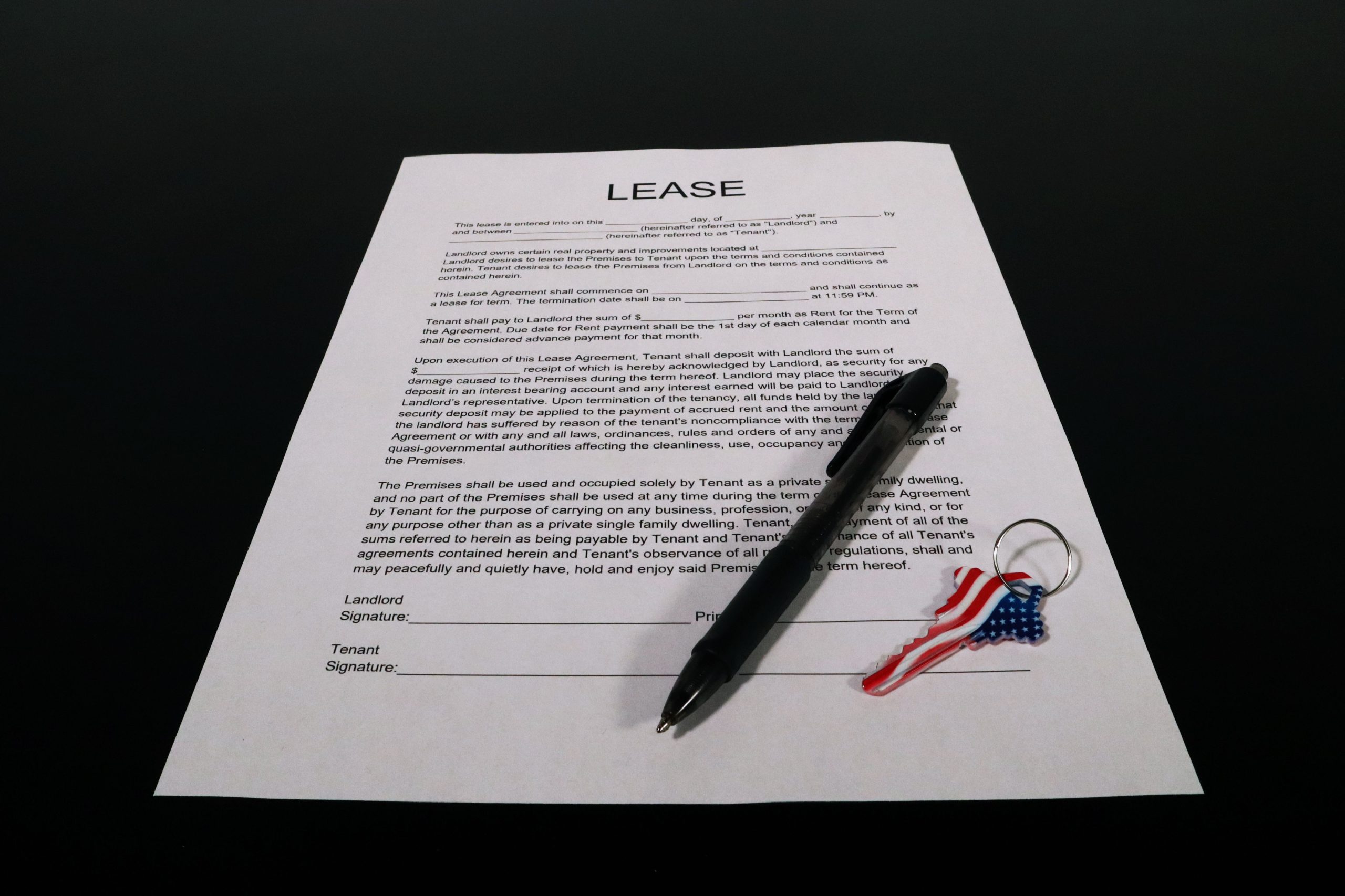
Why so many block-management questions start with the same answer: “What does the lease say?”

If you own a leasehold apartment, there is one document that affects far more of the day-to-day management of your development than you might realise:

your lease.

It is common for leaseholders to contact their managing agent with what appears to be a straightforward question:

Who is responsible for repairing my windows?

Can I replace my apartment entrance door?

Who pays for repairs to the roof?

Can I alter my balcony?

Why do I pay a different proportion of the service charge from another apartment?

Can the management company collect money towards future major works?

Surely there must be a standard answer?

Very often, there isn’t.

The answer may depend upon the wording of the individual lease.

What does a lease actually do?

A residential lease is much more than the document that gave you the right to occupy your apartment when you purchased it.

It is a legally binding agreement which continues to govern the relationship between the relevant parties throughout the term of the lease.

Among other things, a lease may establish:

  • what forms part of the individual apartment;
  • what constitutes the common parts;
  • who is responsible for repairing and maintaining different parts of the building;
  • which costs can be recovered through the service charge;
  • how those costs are divided between leaseholders;
  • whether a reserve or sinking fund can be collected;
  • what alterations require consent;
  • rights over parking spaces, gardens and accessways; and
  • restrictions affecting the use of the property.

This is why understanding the lease is such an important part of managing a residential development.

Two similar buildings can have completely different leases

This is something that can cause considerable confusion.

Two apartment developments could be next door to each other, look almost identical and have entirely different arrangements for repairs and service charges.

At one development, windows may form part of the individual apartment and be the leaseholder’s repairing responsibility.

At another, some or all elements may fall within the landlord or management company’s repairing obligations, with the cost recoverable through the service charge.

Neither arrangement is automatically right or wrong.

The starting point is the wording of the relevant lease.

That is also why something a friend has been told by their managing agent at another development may not necessarily apply to your own property.

“But that doesn’t seem fair”

This is another situation managing agents encounter regularly.

Suppose one apartment pays a larger percentage of the service charge than another.

It may seem fairer simply to divide the expenditure equally between every apartment.

But if the leases specify particular percentages or another method of apportionment, a managing agent cannot simply replace that arrangement with one that appears fairer.

The same principle can arise with repairs.

Something may intuitively feel as though it should be the individual owner’s responsibility – or alternatively something everyone should pay towards – but the lease may say otherwise.

A managing agent’s role isn’t to rewrite the lease according to what seems fairest at the time.

We have to understand and work within the legal framework governing the development.

Alterations are another common source of confusion

Owning a leasehold apartment doesn’t necessarily mean you can alter every part of it without reference to anybody else.

Depending upon the lease, consent may be required before carrying out particular alterations.

This can become especially important where proposed work affects the external appearance or fabric of the building, communal areas or matters such as windows and apartment entrance doors.

There may also be other requirements to consider, including building regulations, planning requirements and fire or structural safety.

So before undertaking significant alterations, it is sensible to establish what the lease requires first.

The lease also matters when preparing service charges

A managing agent cannot simply decide what expenditure should be included within a service charge.

The lease provides the contractual basis for the service charge and will normally set out the types of expenditure that can be recovered.

It may also specify how expenditure is apportioned and whether money can be collected towards future expenditure through a reserve or sinking fund.

This is particularly important when planning major works.

Building up reserves can be very sensible financial planning, but the ability to collect those contributions must still be considered within the terms of the relevant lease.

The lease doesn’t exist in isolation

There is an important qualification.

The lease is a fundamental document, but it is not the only source of rights and obligations affecting a leasehold development.

Legislation can provide additional rights and responsibilities, including statutory requirements concerning service charges, consultation and other aspects of residential leasehold management.

The management company may also have Articles of Association governing how the company itself operates.

And there may be other relevant legal documents associated with a particular development.

Where lease wording is unclear, disputed or requires legal interpretation, specialist advice from an appropriately qualified solicitor may be necessary.

Why does your managing agent keep asking for the lease?

Sometimes an owner wants a simple yes or no answer and may wonder why the managing agent needs to check documents first.

Usually, it is because giving a quick answer without checking the legal position would be poor management.

If you ask:

“Who is responsible for this repair?”

the answer shouldn’t be based on what usually happens elsewhere.

If you ask:

“Can I make this alteration?”

the answer shouldn’t simply be based on whether the proposed work seems reasonable.

And if directors ask:

“Can we charge this through the service charge?”

the answer shouldn’t be based purely on whether everyone agrees that it would be sensible.

The relevant documents need to be considered.

Plain English matters too

Leases are not always easy documents to read.

Many contain terminology and drafting styles that are unfamiliar to people who do not deal with them regularly, and older leases can be particularly difficult to follow.

At Prestige Property Management (NW) Ltd, our approach is to explain management matters as clearly as possible and help directors and leaseholders understand how the provisions of their development affect its day-to-day management.

Where a matter requires formal legal interpretation or specialist advice, we will recommend that the appropriate professional is consulted.

Understanding the difference is important.

Your lease doesn’t stop mattering when you buy your apartment

For many owners, the lease is something they see during the conveyancing process and then rarely look at again.

But in a leasehold development, it remains one of the most important documents governing how the building is managed.

It affects responsibilities.

It affects expenditure.

It affects alterations.

It affects rights.

And it can explain why the arrangements at your development are different from the block down the road.

So when a block-management question begins with:

“Who is responsible?”

“Can we do this?”

or

“Who should pay?”

there is a very good reason why the first response is often:

What does the lease say?

This article provides general information about residential leasehold management and should not be regarded as legal advice. The position will depend upon the terms of the relevant lease and the individual circumstances.

Posted by PPM North Wales in Advice & Insights
Why Does My Service Charge Change Every Year?

Why Does My Service Charge Change Every Year?

It is one of the most common questions in block management:

“Why has my service charge gone up?”

It is an understandable question, particularly when household costs are already under pressure.

But a service charge is not normally a fixed annual fee, and an increase in the service charge does not necessarily mean that the managing agent has simply increased its charges.

In most developments, the service charge is made up of the estimated cost of running, maintaining and managing the building or estate for the coming financial year. Most service charges are variable, meaning they can rise or fall according to the costs actually incurred, subject to the lease and the requirement for charges to be reasonable. lease-advice

So why can the figure change from one year to the next?

The service charge pays for much more than the managing agent

This is probably the biggest misunderstanding about service charges.

The managing agent’s fee is normally only one part of the overall budget.

Depending on the development and what the lease allows, the service charge might also pay for:

  • buildings insurance;
  • communal electricity;
  • cleaning;
  • gardening and grounds maintenance;
  • lift servicing and maintenance;
  • fire alarm and other safety systems;
  • general repairs and maintenance;
  • accountancy costs;
  • health and safety requirements;
  • major or planned works; and
  • contributions towards a reserve or sinking fund.

The exact costs that can be recovered and the way they are divided between leaseholders depend upon the individual lease. lease-advice

This means your total service charge could increase even if the managing agent’s own fee has changed very little.

A budget is an estimate

At the beginning of a service charge year, nobody knows exactly what every cost will eventually be.

A budget therefore has to be prepared using the information available at the time.

We may have confirmed contract prices for some services. For others, we may need to make a reasonable estimate based on previous expenditure, known price increases and work expected during the year.

Then real life happens.

A communal pump fails.

A roof starts leaking.

Electricity costs change.

A contractor increases their price.

An insurance premium changes at renewal.

An inspection identifies work that wasn’t anticipated when the previous year’s budget was prepared.

That is why many leases provide for service charges to be collected in advance based on estimated expenditure and then reconciled against the actual expenditure afterwards. lease-advice

Some increases are outside the managing agent’s control

Managing agents should seek value for money and properly manage expenditure.

But that doesn’t mean we control the price of everything a development needs.

Insurance premiums are determined by insurers.

Electricity prices are determined by energy suppliers.

Contractors have their own labour, material and operating costs.

Specialist inspections and compliance requirements can also create expenditure that cannot simply be ignored because it wasn’t in last year’s budget.

Our role is to scrutinise costs, obtain competitive quotations where appropriate and give directors clear information so that informed decisions can be made.

The cheapest budget isn’t necessarily the best budget

It can be tempting to judge a budget simply by whether the service charge has stayed the same.

But keeping a service charge artificially low can create a different problem.

If we know that expenditure is likely to increase but continue budgeting at the previous year’s level, the development may simply face a shortfall later.

That isn’t really saving money.

It is postponing the bill.

At PPM, we believe a good service charge budget should be realistic and explainable.

That doesn’t mean accepting every increase without question. It means looking carefully at what the development genuinely needs and budgeting accordingly.

What about the reserve fund?

Where the lease permits one, a reserve or sinking fund allows money to be built up towards larger items of expenditure that do not arise every year.

That might include external decoration, replacing a roof, major lift expenditure or other significant planned works. Reserve funds can help spread the cost over a longer period and reduce the likelihood of very large one-off demands. lease-advice

But again, that money has to come from somewhere.

If a building is likely to need substantial work in five years’ time, directors may have to decide whether to increase reserve contributions now or accept the possibility of a larger demand later.

There isn’t always a painless answer.

Good financial management means making that decision with the best information available.

Why might my share be different from my neighbour’s?

Not every development divides its service charge equally.

The lease determines how each property contributes.

Depending upon the wording, contributions might be based on a stated percentage, property size, relative benefit from particular services or another method specified by the lease. lease-advice

The managing agent cannot simply change those proportions because another method appears fairer.

We have to work within the provisions of the lease.

What happens if the actual expenditure is different?

Because a budget is an estimate, the final expenditure may be higher or lower.

At the end of the financial year, the actual expenditure is calculated and the service charge accounts are prepared.

What happens to a surplus or deficit will depend upon the lease. A shortfall may result in a balancing charge, while a surplus might be credited, refunded or dealt with in another way permitted by the lease. lease-advice

This is another reason why accurate budgeting matters.

The closer the original budget is to the realistic cost of running the development, the less likely owners are to face an unexpected adjustment later.

A service charge increase should be understandable

Nobody enjoys receiving a higher service charge demand.

But leaseholders should be able to understand why their contribution has changed.

Was insurance more expensive?

Has a maintenance contract increased?

Are additional works planned?

Has more money been allocated to reserves?

Has an existing contract been renegotiated?

Has the managing agent’s fee changed?

Those are much more useful questions than simply asking whether the overall figure has increased.

Leaseholders also have statutory rights to request information about service-charge expenditure and supporting documentation. lease-advice

Our approach at PPM

At Prestige Property Management (NW) Ltd, we don’t believe the aim of budgeting should simply be to produce the lowest possible service charge figure.

Our aim is to help our clients produce a budget that is realistic, transparent and appropriate for the development.

That means looking at known contracts and expenditure, considering anticipated maintenance and compliance requirements, reviewing reserve requirements where applicable and explaining significant changes to directors.

Sometimes that will mean recommending an increase.

Sometimes expenditure can be reduced.

And sometimes an unexpected event during the year will change the position completely.

A good service charge budget isn’t one that never changes.

It’s one where the figures have been considered properly and the reasons behind them can be explained.

This article provides general information about residential service charges. Individual rights and obligations depend upon the terms of the relevant lease and the circumstances of the development.

Posted by PPM North Wales in Advice & Insights
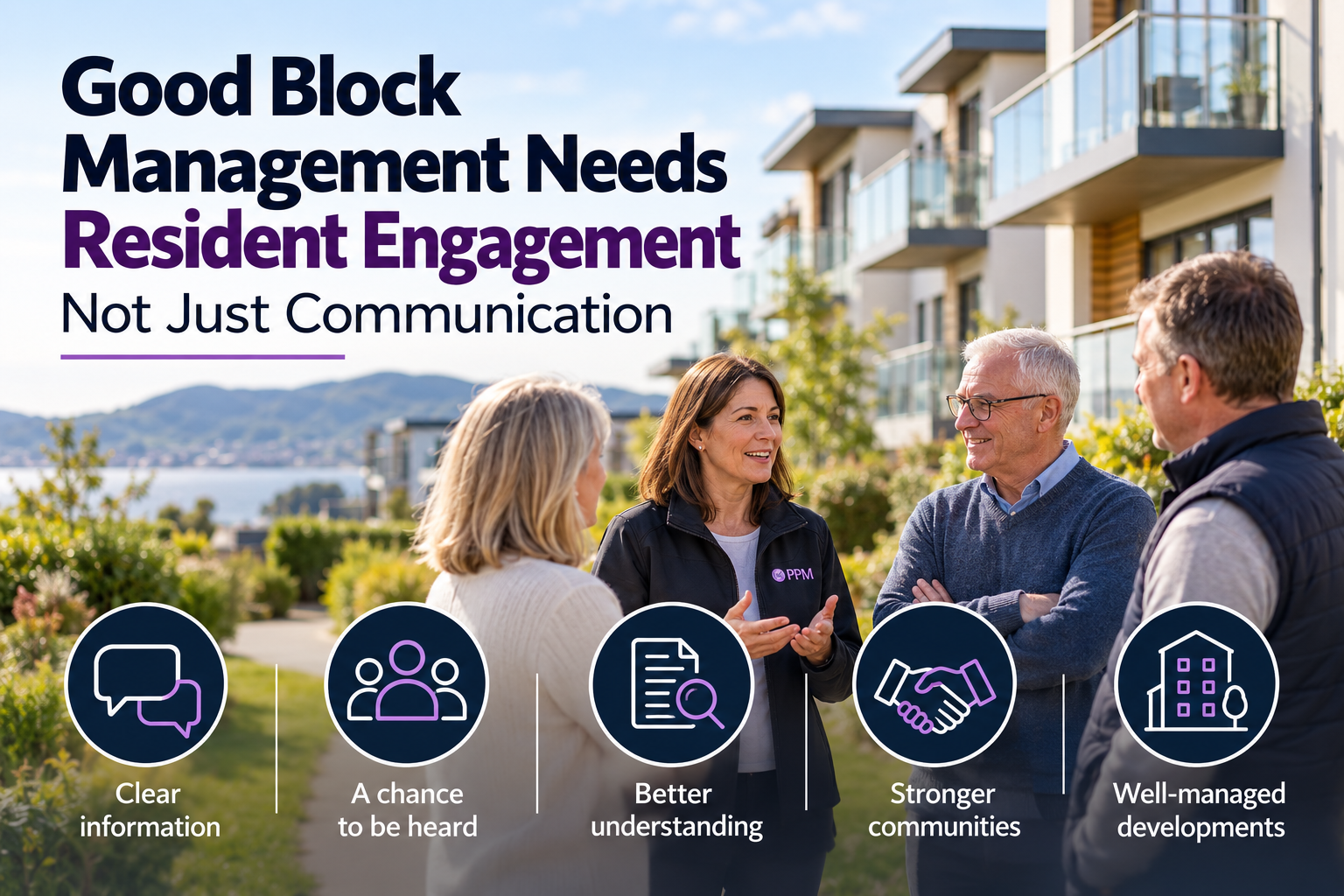
Good Block Management Needs Resident Engagement – Not Just Communication

Good Block Management Needs Resident Engagement – Not Just Communication

Good communication is something every managing agent promises.

But good block management should go further than simply sending emails, issuing notices and circulating meeting minutes.

It should also involve resident engagement.

This is particularly topical in Wales. On 23 September 2026, the Welsh Government agreed proposals for the establishment of a National Resident and Leaseholder Engagement Forum for Wales.

It reflects a wider direction in residential property management: residents and leaseholders should be appropriately informed, have clear ways to raise concerns and, where appropriate, have an opportunity to contribute to discussions about their homes.

But what does meaningful resident engagement actually look like in a privately managed apartment development?

And, equally importantly, what doesn’t it mean?

Communication and engagement are not quite the same thing

Communication is often one-way.

The managing agent tells residents that contractors are attending, provides information about planned works, sends service charge information or circulates an update from the directors.

All of that is necessary.

Engagement is slightly different.

It means giving residents an appropriate opportunity to ask questions, raise concerns, understand why something is happening and, where appropriate, contribute information that may help directors and the managing agent make better-informed decisions.

That doesn’t mean every issue needs a meeting or consultation.

Sometimes a straightforward update is exactly what is required.

The important thing is knowing the difference.

Resident engagement doesn’t mean management by committee

This distinction is particularly important in Residents’ Management Companies (RMCs) and Right to Manage (RTM) companies.

A development may contain 20, 50 or 100 leaseholders, all with different priorities and opinions.

That does not mean every management decision can – or should – be made by asking everyone what they would prefer.

The company has directors.

Those directors have responsibilities for making decisions on behalf of the company within the authority available to them.

The managing agent supports those directors with information, advice and day-to-day management.

And sitting behind both is the lease, the company’s Articles of Association and the relevant legal framework.

Resident engagement does not override any of those things.

Sometimes the right decision won’t be the most popular one

This is one of the realities of block management.

Most people understandably want service charges kept as low as possible.

But a building still needs to be insured, maintained and managed. Compliance requirements have to be addressed. Contracts need to be paid. Repairs cannot always be postponed.

Likewise, directors may receive professional advice recommending work that residents would rather not pay for.

Good engagement means explaining what has been recommended, why it matters, what the options are and, where appropriate, listening to residents’ concerns.

It does not mean that necessary work automatically disappears because it is unpopular.

There is an important difference between listening to people and promising that everybody will get the outcome they want.

The lease still matters

Many disagreements in block management ultimately come back to the lease.

Who is responsible for a particular repair?

Can the cost be recovered through the service charge?

How should costs be apportioned?

Who maintains a particular part of the building?

What alterations require consent?

These questions cannot always be resolved by a majority vote or by deciding what seems fairest.

The starting point is usually the legal documentation governing the development.

That is why good resident engagement should also involve clear explanations.

Where the lease determines the position, residents should be told that – and, where possible, have the position explained in understandable language.

Directors need to be able to make decisions

Directors of RMC and RTM companies can sometimes find themselves in a difficult position.

They may live alongside the people affected by their decisions. They may see those people every day. And they are often volunteers.

It can therefore be tempting to delay a difficult decision until everyone agrees.

In reality, unanimous agreement may never come.

Good governance and good engagement should work together.

Directors should have the information they need. Residents should be appropriately informed. Relevant concerns should be considered. Professional advice should be obtained where necessary.

Then somebody still has to make the decision.

Engagement can also improve management

This shouldn’t all sound negative.

Residents often know their development extremely well.

They may notice a recurring leak before it appears during a scheduled inspection, know that an entrance door is regularly being left open or spot a problem with lighting, drainage or communal areas before the managing agent becomes aware of it.

A sensible route for reporting issues can therefore help problems to be identified earlier.

Residents can also provide useful information when major works are being planned.

Welsh Government guidance on fire-safety remediation, for example, emphasises regular communication, meaningful engagement and understanding how works may affect the people actually living in the building.

That is a good principle beyond major remediation projects too.

Clear communication prevents unnecessary frustration

One of the simplest improvements any development can make is to establish who communicates what.

Residents should know where to report repairs.

Leaseholders should know where service charge enquiries should be directed.

Directors should understand which matters need board decisions.

The managing agent should know when an issue needs to be escalated to the directors or to a specialist professional.

And when an important decision has been made, people affected by it should receive a clear explanation where appropriate.

A surprising amount of conflict in block management comes not from the original problem, but from uncertainty about what is happening next.

Plain English matters

Property management inevitably involves technical terminology.

Leases, Section 20 consultation, fire risk assessments, reserve funds, service charge apportionments, company Articles and statutory obligations are not everyday subjects for most residents.

There is little value in sending somebody a technically correct explanation if they cannot understand what it means.

At Prestige Property Management (NW) Ltd, we believe part of a managing agent’s role is to make complicated information understandable.

That doesn’t mean oversimplifying important legal or technical issues.

It means explaining them clearly and knowing when specialist legal, surveying, fire-safety or other professional advice is required.

Good engagement is about balance

Good block management shouldn’t mean residents only hear from their managing agent when there is a problem or a bill to pay.

But neither should managing a development become an endless attempt to obtain unanimous agreement about every decision.

The balance is somewhere between the two.

Communicate clearly.

Listen appropriately.

Explain the reasons behind important decisions.

Follow the lease and legal framework.

Give directors the information they need to make informed decisions.

And make sure residents know how to raise genuine concerns.

That is meaningful resident engagement.

And ultimately, it helps create developments where residents, directors and managing agents have a clearer understanding of their respective roles.

At PPM, that’s the approach we believe good residential block management should take.

This article provides general information about residential property management and should not be regarded as legal advice.

Posted by PPM North Wales in Advice & Insights
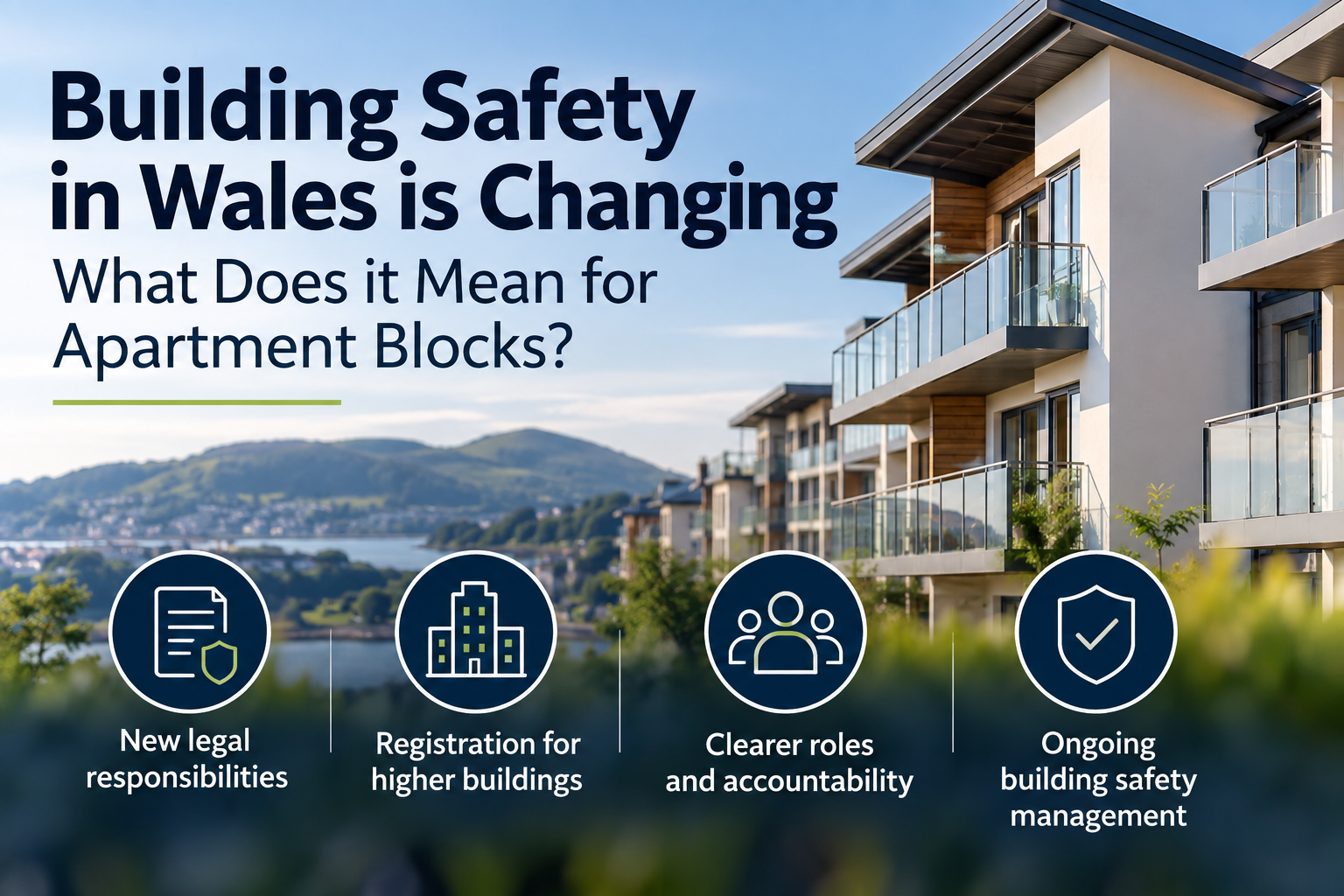
Building Safety in Wales is Changing – What Will It Mean for Apartment Blocks?

Building Safety in Wales is Changing – What Will It Mean for Apartment Blocks?

Building safety regulation in Wales is moving another step closer to implementation.

On 24 September 2026, the Welsh Government launched a new consultation on regulations under the Building Safety (Wales) Act 2026.

The latest consultation looks at three important areas:

  • how the Principal Accountable Person will be determined;
  • registration of Category 1 and Category 2 buildings with Building Safety Authorities; and
  • the fees that Building Safety Authorities will be able to charge.

The consultation remains open until 18 December 2026.

For directors of Residents’ Management Companies (RMCs), Right to Manage (RTM) companies and others involved in managing apartment buildings in Wales, this is worth paying attention to.

The new regime is about much more than carrying out a fire risk assessment. It introduces clearer legal responsibilities for the ongoing management of building safety during the occupation of residential buildings.

Which buildings are affected?

One of the important differences between the Welsh regime and the system introduced in England is its breadth.

The Building Safety (Wales) Act establishes a new regime for multi-occupied residential buildings containing two or more residential units, although the duties vary according to the category of building.

The Act creates three categories of regulated building.

Category 1 covers the highest buildings – those at least 18 metres high or with at least seven storeys.

Category 2 covers buildings below 18 metres and fewer than seven storeys, but which are at least 11 metres high or have at least five storeys.

Category 3 covers lower-rise regulated buildings.

Some of the more extensive requirements apply to Category 1 and Category 2 buildings. For example, buildings that are at least 11 metres high or have at least five storeys will be required to register with a Building Safety Authority.

However, that does not mean directors of smaller apartment developments can ignore the legislation.

The Act introduces duties relating to the assessment and management of fire safety risks across in-scope buildings, while structural safety duties apply to the higher categories.

Who is actually responsible?

This is where the new legislation becomes particularly important for management companies and their directors.

The Act introduces the roles of the Accountable Person and, where appropriate, the Principal Accountable Person.

Responsibility will depend upon the legal arrangements for the individual building.

That means it should not simply be assumed that the managing agent is the Accountable Person because they deal with the day-to-day management of the development.

Likewise, the name of the management company appearing on correspondence does not necessarily answer the question.

The leases, ownership structure and repairing responsibilities of the development all need to be understood.

The Welsh Government’s latest consultation is considering the detailed rules for determining who will be the Principal Accountable Person where more than one Accountable Person exists.

This is another reason why understanding the legal structure of a development matters.

What is the managing agent’s role?

A professional managing agent will have an important role in helping clients manage their responsibilities.

That may include coordinating fire risk assessments and other specialist inspections, maintaining records, monitoring actions, arranging remedial works, communicating with residents and ensuring important matters are brought to the attention of directors.

But there is an important distinction between managing the building on behalf of a client and holding the statutory responsibility imposed by legislation.

Good management therefore starts with understanding who is responsible for what.

Where specialist fire, structural or legal advice is required, the appropriate competent professional should also be involved.

Registration is coming for higher buildings

Under the new regime, Category 1 and Category 2 buildings will need to be registered with their relevant Building Safety Authority.

The current consultation considers how that registration system should operate, including the information that will need to be supplied and the fees that may be charged.

This is particularly relevant for management companies responsible for larger apartment developments.

Although much of the detailed implementation will come through regulations and guidance, directors do not need to wait until the final deadline to start understanding their building.

Basic information such as building height, number of storeys, ownership structure, leases, fire safety information and repairing responsibilities is likely to become increasingly important.

Building safety is becoming an ongoing management responsibility

Perhaps the biggest change is the move away from thinking about building safety as a collection of individual certificates and inspections.

The Welsh regime is intended to create clearer accountability for the ongoing assessment and management of building safety risks.

That means identifying risks, recording information, acting on recommendations and being able to demonstrate what has been done.

For managing agents and directors, good record keeping and clear decision-making will therefore become increasingly important.

This links closely with something we discussed in our recent article on good governance.

A report sitting in a file is only part of the process.

If an assessment identifies work that needs to be undertaken, somebody needs to understand the recommendation, decide what action is required, arrange the work where appropriate and retain a record of what happened.

Residents also have a stronger voice

The legislation is not solely about landlords, management companies and managing agents.

The new framework also provides residents with stronger rights relating to building safety information and concerns, alongside responsibilities of their own.

For those managing residential buildings, clear communication with residents will therefore become an increasingly important part of building safety management.

Residents should know how to raise a safety concern and have confidence that genuine concerns will be considered appropriately.

What should RMC and RTM directors be doing now?

There is no need to panic or start implementing requirements that have not yet come into force.

Much of the detailed framework is still being developed through secondary legislation and guidance.

But there is a difference between waiting for the regulations and being unprepared for them.

This is a sensible time for directors and managing agents to make sure they understand their buildings.

That means knowing what fire and building safety information is already held, whether assessments and inspections are up to date, what actions remain outstanding and who has responsibility for the different parts of the building.

For larger developments, it is also worth establishing whether the building is likely to fall within Category 1 or Category 2 and therefore become subject to the registration requirements.

PPM will continue to follow the changes

At Prestige Property Management (NW) Ltd, we manage residential developments across North Wales and will continue to follow the implementation of the Building Safety (Wales) Act 2026 as the detailed regulations and guidance emerge.

Our approach is straightforward: understand the requirements, explain them clearly to our clients and make sure directors have the information they need to make informed decisions.

There will undoubtedly be more detail to come as the new regime is implemented.

For now, the important message for RMC and RTM directors is simple:

Building safety in Wales is changing, and understanding your building, your responsibilities and the information you already hold is the best place to start.

Welsh Government consultation

This article provides general information about the developing building safety regime in Wales and should not be regarded as legal or specialist fire or structural safety advice.

Posted by PPM North Wales in Advice & Insights
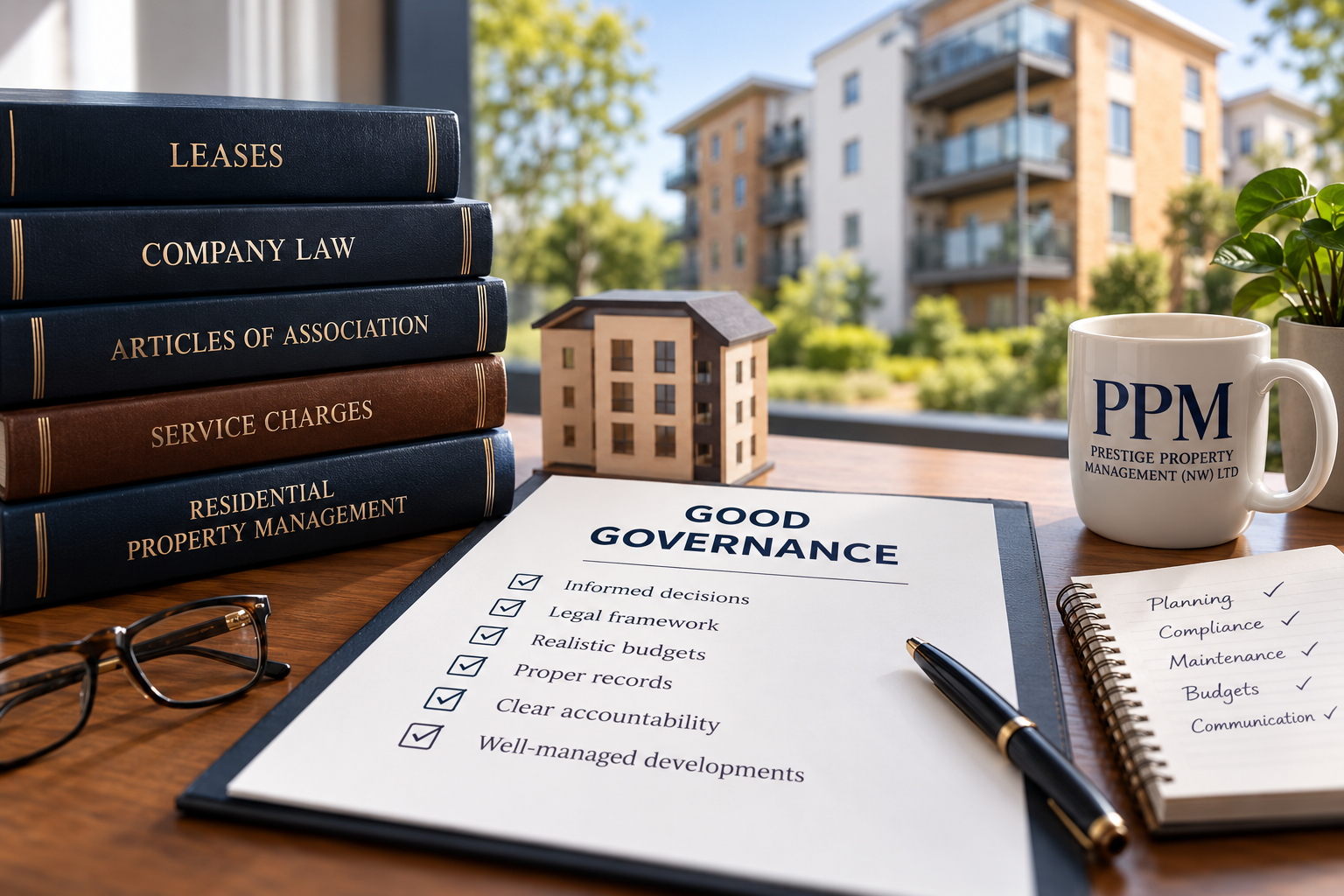
What Does Good Governance Actually Mean for a Residents’ Management Company?

What Does Good Governance Actually Mean for a Residents’ Management Company?

“Good governance” is a phrase increasingly used in residential block management. But what does it actually mean for the directors of a Residents’ Management Company (RMC) or Right to Manage (RTM) company?

Governance can sound complicated, particularly when discussions involve leases, company law, Articles of Association, statutory duties and directors’ responsibilities.

At PPM, we believe these subjects should be explained in plain English. Our approach combines practical block management experience with a strong legal understanding, helping directors understand not only what needs to be done, but why.

Put simply, good governance means making informed decisions, following the legal framework governing the company and development, keeping appropriate records and making sure there is clear accountability for the decisions being made.

It isn’t about making block management unnecessarily corporate or complicated.

It is about running the company – and managing the development – properly.

Directors make the decisions

One of the most important distinctions is between the role of the directors and the role of the managing agent.

The managing agent does not replace the board.

Directors remain responsible for making many of the important decisions affecting their company and development. The managing agent’s role is to provide the information, professional guidance and day-to-day management support that helps them make those decisions.

Good governance therefore depends on the relationship between the two.

Directors need appropriate information.

The managing agent needs clear instructions and authority.

And important decisions need to be properly recorded.

The lease comes first

Good governance also means understanding that neither directors nor the managing agent can simply decide how a development should operate.

The lease or transfer documentation sets out important rights and responsibilities, including what the management company is responsible for, what leaseholders must contribute towards and how service charges should be administered.

The Articles of Association govern how the company itself operates, while legislation places further duties and requirements on those involved in managing residential property.

Before making significant decisions, it is therefore important to understand what the documents actually say and what the legal framework allows.

Something may appear perfectly sensible from a management perspective but still conflict with the lease or fall outside the authority of the management company.

That distinction matters.

Budgets should reflect the building

Setting an annual service charge budget is more than repeating last year’s figures with an inflationary increase.

Directors should be given a realistic picture of what their development is likely to need.

That means considering existing contracts and utilities, routine maintenance, compliance requirements, known repairs and, where appropriate and permitted by the lease, future reserve requirements.

There will inevitably be discussions about affordability.

Keeping service charges reasonable is important, but so is understanding the potential consequences of reducing expenditure or reserve contributions.

Good governance means directors are given enough information to make that decision knowingly.

Decisions should be recorded

Not every management decision requires a lengthy board meeting.

However, significant decisions should leave a clear record.

That may include approval of budgets, major expenditure, significant contracts, compliance works or decisions to defer recommended works.

Good records protect both the company and its directors.

They also provide continuity when directors change. A future board should be able to understand not only what was decided but, where appropriate, why it was decided.

Compliance needs ownership

Fire safety, health and safety, insurance, statutory inspections and other compliance requirements should not simply sit on a list until somebody remembers them.

There should be a clear system for identifying what is required, when it is due, what action has been taken and what remains outstanding.

Where specialist advice is required, the appropriate professional should be involved.

The managing agent can coordinate and monitor this process, but directors should also understand significant risks and outstanding actions affecting their development.

Good governance doesn’t mean agreeing with the managing agent

A managing agent advises. Directors decide.

There will be occasions when directors choose a different course from the one recommended by their managing agent.

That does not automatically mean governance has failed.

What matters is that directors were given appropriate information, understood the implications of their decision and that the decision was properly recorded.

Likewise, a good managing agent should be prepared to give advice that may not always be the easiest or most popular option.

Our job isn’t simply to agree.

Our job is to help our clients make informed decisions.

What does good governance look like in practice?

Usually, it isn’t particularly dramatic.

It is a realistic annual budget.

It is directors receiving the information they need before approving expenditure.

It is checking the lease before making a decision.

It is keeping proper company records.

It is knowing which compliance actions remain outstanding.

It is recording significant decisions.

And it is directors and their managing agent understanding where their respective responsibilities begin and end.

At Prestige Property Management (NW) Ltd, we believe good governance should make managing a development clearer, not more complicated.

We combine practical block management experience with an understanding of the legal framework within which residential developments operate. Where specialist legal advice is required, we will always recommend that the appropriate legal professional is consulted.

Our role is to help directors understand the information in front of them, explain the practical implications and support them in making properly informed decisions.

Good governance isn’t a management buzzword. It is good information, sound decision-making and proper accountability – explained in a way people can actually understand.

Posted by PPM North Wales in Advice & Insights
Keeping Communal Hallways, Stairs and Landings Clear

Keeping Communal Hallways, Stairs and Landings Clear

Communal hallways, staircases and landings are not simply shared spaces within an apartment building. They often form part of the route residents may need to use to leave the building safely during a fire or other emergency.

Keeping these areas clear is therefore an important part of managing fire safety in residential blocks.

North Wales Fire and Rescue Service includes the following advice within its home fire-safety guidance:

“Keep the exits from your home clear so that people can escape if there’s a fire.”

This simple principle is equally important within the communal parts of blocks of flats, where residents may need to move through corridors, landings and staircases to reach a place of safety.

Why must communal escape routes be kept clear?

During a fire, smoke can reduce visibility very quickly. An item that appears harmless under normal conditions can become a serious obstruction or trip hazard when residents are trying to leave through smoke or poor lighting.

Items left in communal areas may also:

Restrict the available width of an escape route
Make evacuation more difficult for children, older residents or people with reduced mobility
Obstruct access for firefighters and other emergency services
Interfere with the operation of fire doors
Increase the amount of combustible material within the common parts
Provide fuel that could allow a fire to develop or spread

The common parts of a residential building are covered by fire-safety legislation and must be considered within the building’s fire risk assessment. This commonly includes entrance halls, internal corridors, staircases and landings.

What items can cause a problem?

Items that may need to be removed from communal areas include:

Plant pots and artificial plants
Coat stands, shoe racks and loose footwear
Tables, chairs and other furniture
Bicycles, scooters and pushchairs
Parcels, rubbish and recycling
Mobility equipment where no suitable storage arrangement has been agreed
Decorative items made from combustible materials
Anything placed where it could prevent a fire door from closing properly

Pictures, doormats and small decorative items are sometimes permitted, but this will depend on the findings of the building’s fire risk assessment and the fire-safety policy adopted for that particular development.

Some buildings operate a managed-use policy, under which a limited number of carefully controlled items may be allowed. Other buildings require a clear or sterile-area policy, meaning that communal routes must remain completely free from residents’ belongings and combustible decorations.

The requirements can differ because every building has its own construction, layout, evacuation strategy and level of risk.

“It has been there for years” does not mean it is safe

Residents sometimes question why an item must be removed when it has stood in the same place for many years without causing a problem.

Fire-safety requirements develop as buildings are assessed, guidance changes and risks are identified. The absence of a previous incident does not mean that an obstruction or combustible item is safe to retain.

Managing agents and management companies must act upon the recommendations contained within the building’s current fire risk assessment. Where an assessor identifies that communal areas must be kept clear, those responsible for the building cannot simply disregard that advice.

Fire doors must also remain unobstructed

Items must never be positioned where they could hold open, obstruct or prevent the full operation of a communal fire door.

Fire doors are designed to limit the movement of fire and smoke through a building. A fire door that has been wedged open or prevented from closing may not provide the protection residents expect.

Residents should not remove door-closing devices, wedge communal doors open or store belongings within the swing of a fire door.

Everyone has a part to play

Good communal fire safety depends upon cooperation between residents, directors, landlords, managing agents and contractors.

Residents can help by:

Keeping halls, stairs and landings free from personal belongings
Using designated storage areas where these are provided
Never wedging open a communal fire door
Reporting damaged doors, emergency lighting or fire-safety equipment
Following the fire-safety and evacuation arrangements for their building
Contacting the managing agent before placing decorative or other items in communal areas

Requests to remove belongings are not intended to make a building feel unwelcoming. Their purpose is to keep escape routes usable, reduce avoidable fire risks and protect everyone living within the development.

Communal hallways, stairs and landings are shared safety spaces. Keeping them clear could make a vital difference during an emergency.

Sources and further information:

North Wales Fire and Rescue Service – At Home Fire Safety

Welsh Government – Making Your Small Block of Flats Safe from Fire

Posted by PPM North Wales in Advice & Insights